InterviewCue AI
Start Free

Behavioral Interview

Understand what behavioral interviewing is, what employers are trying to learn, and how to turn your real work experience into focused, credible answers. Start with the overview, choose a role-specific path, or move directly into common questions and guided practice.

Behavioral interviewing explained

What is a behavioral interview?

A behavioral interview is a structured job interview that asks you to explain how you handled real situations in the past. Behavioral interviewing uses specific examples to assess how you make decisions, collaborate, manage conflict, respond to pressure, learn from mistakes, and deliver results.

In a behavioral based interview, questions often begin with “Tell me about a time,” “Describe a situation,” or “Give me an example,” and strong answers clearly explain the context, your individual actions, and the outcome.

01

What Behavioral Interviews Test

A behavioral interview tests ownership, judgment, communication, collaboration, adaptability, conflict resolution, and learning. Interviewers look for credible evidence of what you personally did and how your actions affected the outcome.

02

Common Behavioral Interview Formats

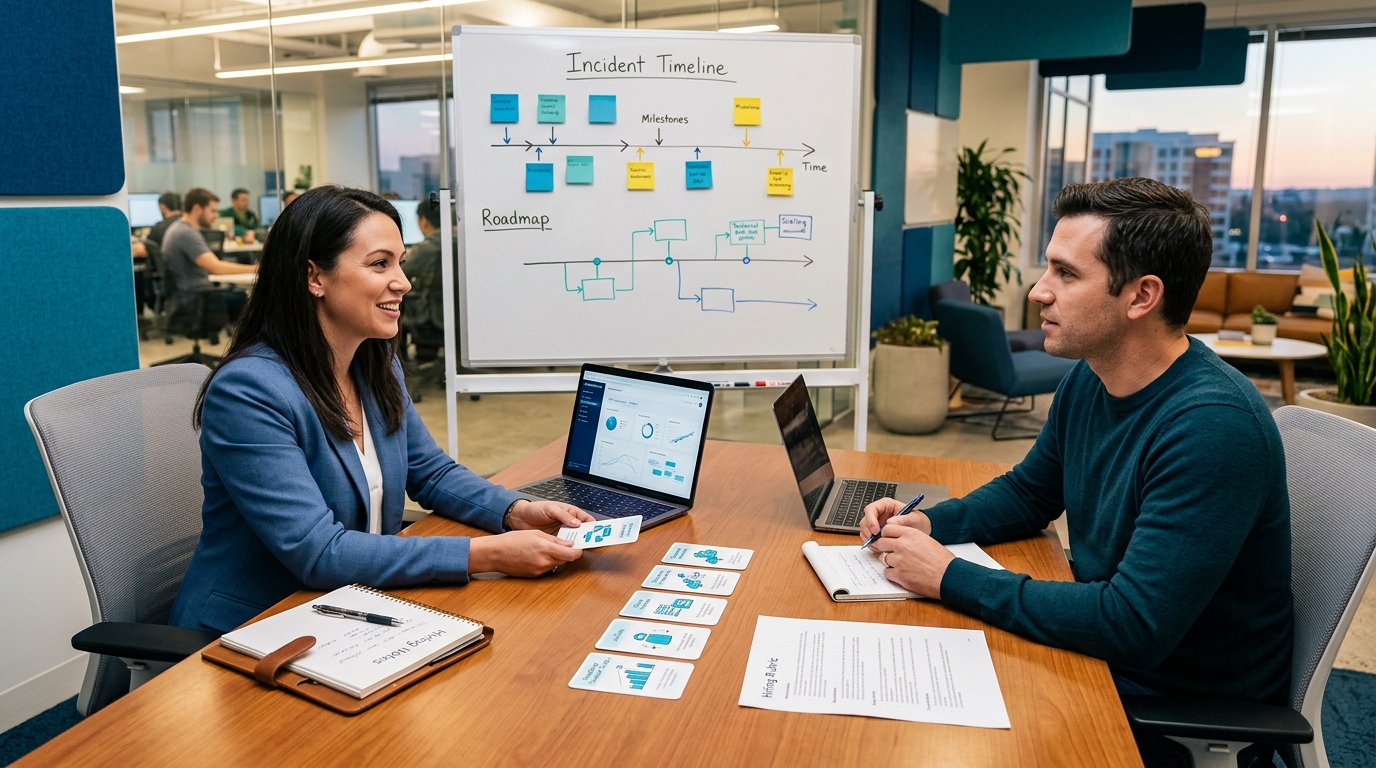
Behavioral interviewing may appear in a recruiter screen, hiring-manager interview, dedicated behavioral round, leadership interview, or a mixed technical and behavioral job interview. Each format uses past-experience questions and follow-up probes.

03

A Typical Behavioral Interview Process

The interviewer asks a broad question, listens to your example, then explores your role, decisions, tradeoffs, results, and lessons. Many candidates structure sample behavioral interview answers with the STAR method: Situation, Task, Action, and Result.

04

How Expectations Change by Level

Early-career candidates should show contribution, initiative, and learning. Senior individual contributors and managers need examples with broader scope, stronger influence, harder decisions, measurable impact, and outcomes that lasted beyond one project.

How to Prepare for a Behavioral Interview?

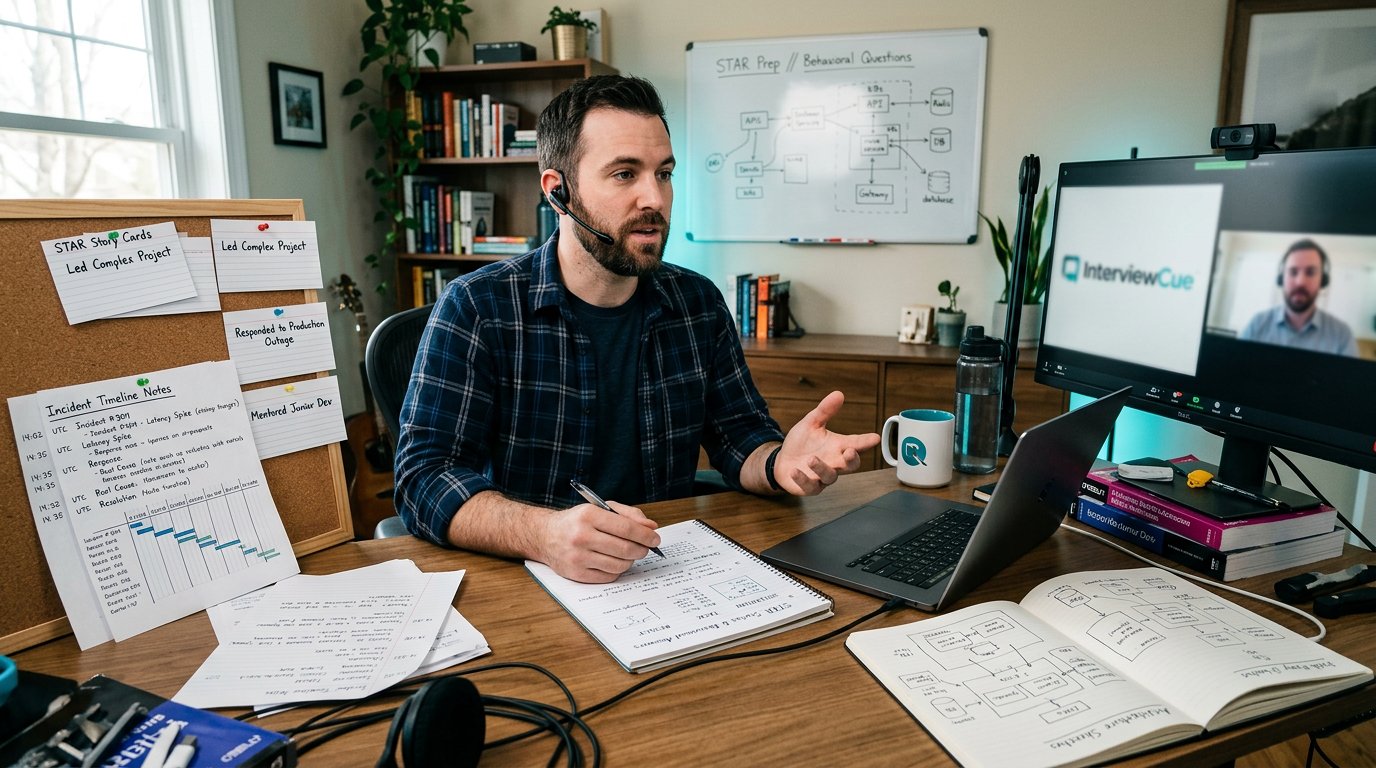
Good preparation is not memorizing scripts. It is building a small set of flexible, evidence-rich stories and practicing how to adapt them under follow-up pressure.

  1. 01

    Build a story bank

    Choose 6–8 real situations covering impact, conflict, failure, ambiguity, and leadership.

  2. 02

    Structure with STAR

    Compress the setup, clarify your task, expand your actions, and land on the result.

  3. 03

    Add role detail

    Include decisions, constraints, stakeholders, and technical or business tradeoffs.

  4. 04

    Practice follow-ups

    Rehearse what changed, how you measured success, and what you would do differently.

Top 10 Behavioral Interview Questions

Start with the question categories that appear across roles, then adapt each example to the scope, responsibilities, and signals of your target position.

Q1

Tell me about a project you took ownership of from start to finish.

Tip:

Choose one project with a clear business or user outcome. Briefly establish the situation and your responsibility, spend most of the answer on the decisions and actions you personally owned, then close with a measurable result and what you learned.

Q2

Tell me about a time you disagreed with a teammate or stakeholder.

Tip:

Describe the disagreement neutrally, clarify the shared goal, and explain how you listened, tested assumptions, and moved the group toward a decision. End with the work outcome and the relationship or process improvement.

Q3

Tell me about a time you had to act with incomplete information.

Tip:

Explain what was unknown, which risks mattered, and how you reduced uncertainty. Show the criteria you used, the reversible step you chose, and how new evidence changed or confirmed your direction.

Q4

Tell me about a mistake you made and what happened next.

Tip:

Own a real mistake without blaming circumstances. State the impact, the immediate correction, and the specific system or behavior you changed afterward. Strong answers include evidence that the lesson affected later work.

Q5

Tell me about a time you demonstrated leadership or influenced a decision.

Tip:

Set up why alignment was difficult, identify the stakeholders, and explain how you built credibility through evidence, questions, or a small experiment. Finish with the decision, its impact, and how you kept others involved.

Q6

Tell me about a time you had to adapt to change or manage competing priorities.

Tip:

Explain what changed, how you ranked the competing goals, and which tradeoffs you made. Include how you aligned stakeholders, adjusted your plan, and delivered the most important outcome.

Q7

Describe a time you explained a complex idea to a non-technical audience.

Tip:

Choose an example where clarity affected a real decision. Explain how you assessed the audience, simplified the message without losing accuracy, checked understanding, and helped the group move forward.

Q8

Tell me about a time you advocated for a customer or user.

Tip:

Describe the customer need, the evidence you gathered, and the tradeoff you had to influence. Focus on the action you personally took and connect the final decision to a concrete customer or business result.

Q9

Tell me about a piece of difficult feedback you received and how you responded.

Tip:

State the feedback directly, without becoming defensive or overexplaining. Describe how you tested its accuracy, what behavior you changed, and a later result that shows the change became part of how you work.

Q10

Tell me about a time you delivered an important result under pressure.

Tip:

Set up the stakes and constraints, then explain how you prioritized, communicated risk, and made decisions as conditions changed. Close with a measurable outcome and what you would repeat or improve.

FAQ

Clear answers to common questions about behavioral interviews, preparation, STAR stories, and what employers evaluate.

How does InterviewCue turn a resume into a behavioral story bank?

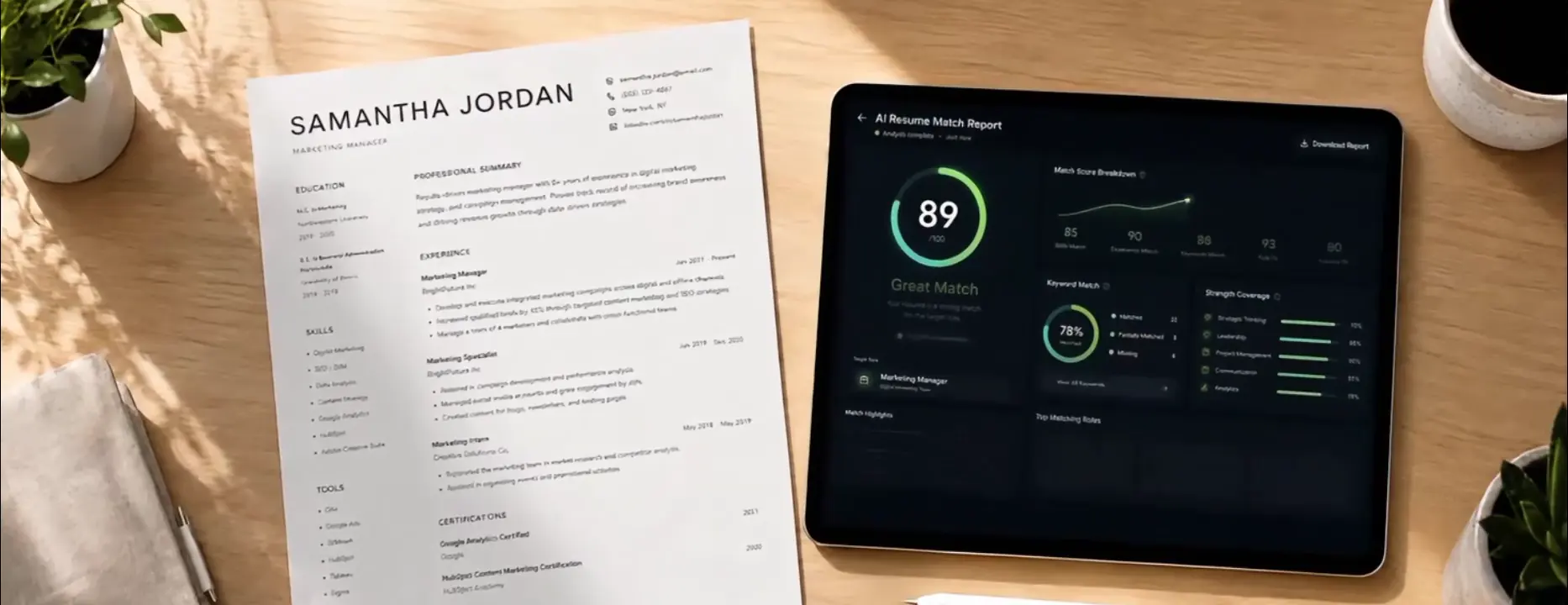
InterviewCue helps surface projects, achievements, decisions, conflicts, and measurable outcomes from your resume, then connects that evidence to the competencies in your target role. You still choose and verify every story; the product helps you find stronger raw material faster.

Can InterviewCue personalize behavioral questions for a specific role?

Yes. Your target role and job context can be used to focus practice on the signals most relevant to that interview, such as ownership for an individual contributor, cross-team influence for a staff engineer, or coaching and delivery for an engineering manager.

Can an AI mock interview ask realistic behavioral follow-up questions?

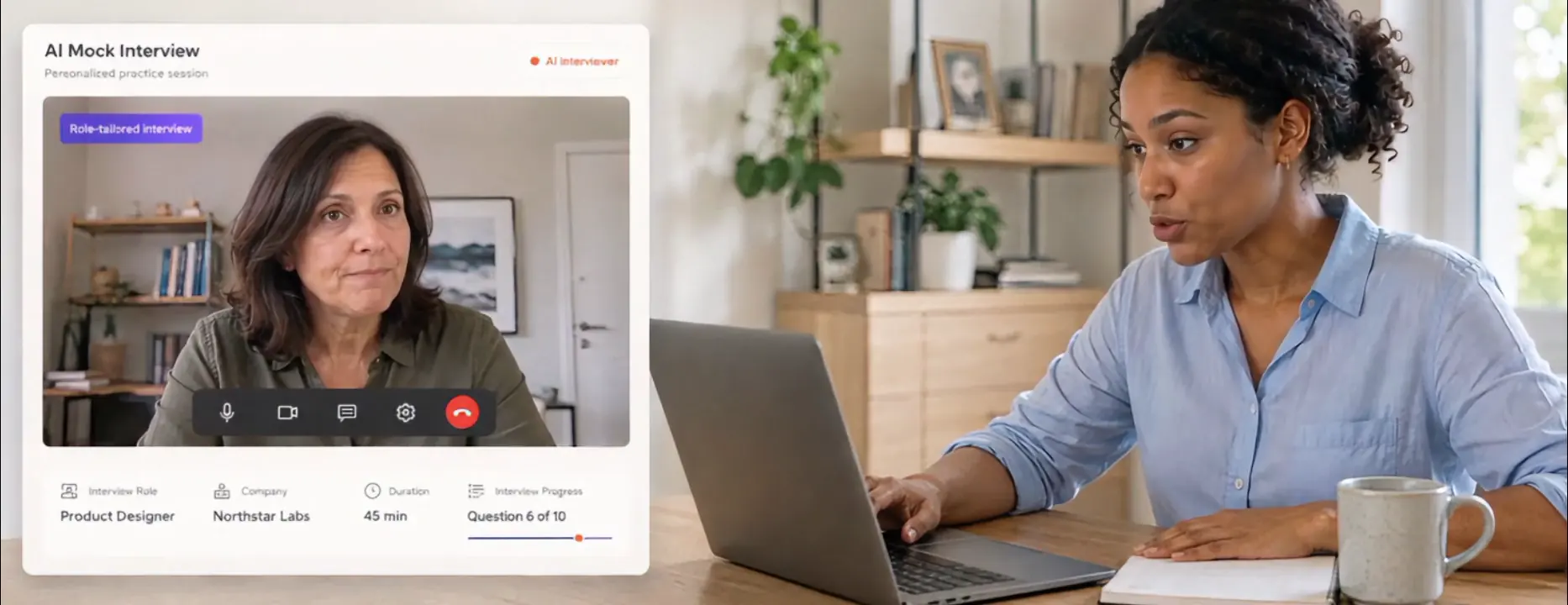
InterviewCue mock interviews can continue beyond the opening question and probe your personal contribution, decision criteria, tradeoffs, measurements, and lessons. That makes practice closer to the deeper conversation candidates face in a real interview.

How does InterviewCue evaluate an answer beyond the STAR structure?

Structure is only one dimension. Useful feedback also looks for specificity, role relevance, clear ownership, credible evidence, measurable outcomes, and whether the answer actually addresses the competency behind the question.

What information should I remove before adding a resume or story?

Remove confidential names, credentials, private customer information, unreleased financial or product details, internal links, and any identifiers your employer would not want shared. Keep the decision context and outcome while generalizing sensitive specifics.

Can InterviewCue help with senior and leadership behavioral interviews?

Yes. Senior candidates can practice stories that demonstrate broader scope, influence without authority, difficult tradeoffs, organizational impact, hiring, coaching, and decisions that continued to matter after one project ended.

How do I practice without memorizing answers word for word?

Practice the evidence and logic rather than a script: the situation, your responsibility, two or three important decisions, the result, and the lesson. InterviewCue can vary questions and follow-ups so you learn to adapt the same true story naturally.

When is it appropriate to use InterviewCue during a live interview?

Use real-time assistance only when the employer, recruiter, or interview platform explicitly permits outside tools. When it is not allowed, use InterviewCue before the interview for resume analysis, story preparation, and mock practice instead.


Your Privacy is Under Protection.

Remove names, customer details, credentials, internal metrics, and other confidential information before uploading a resume or story. InterviewCue can help you prepare with the decisions, actions, and outcomes that matter without requiring sensitive identifiers. During a live interview, use outside assistance only when the employer or interview platform explicitly allows it.

Read the Privacy Policy

Ace Your Interview with InterviewCue.