

01
What Interviewers Evaluate
Interviewers look for requirement discovery, structured problem solving, architecture judgment, communication, tradeoff awareness, and the ability to identify risks before they become production failures.
About Cookies and Data Collection
Analytics and marketing are enabled by default on this website. Cookies and similar technologies help us understand website use, measure advertising and improve our services.
Choose Customize to turn either category off, or Accept to keep both enabled. Your saved choices apply on future visits. Closing this dialog keeps the current settings.
For more information, please read our Privacy Policy and Cookie Policy.
Cookie settings
Always activeFunction:
These cookies and similar technologies are used for activities that are strictly necessary to operate or deliver the service you requested from us.
Learn how system design interviews work, what interviewers evaluate, and how to turn an open-ended architecture prompt into a clear, defensible design. Start with the core framework, explore a specialized path, or practice common questions and follow-ups.
System design interviews explained
A system design interview is an open-ended technical conversation in which you design a software system under realistic product and engineering constraints. Instead of searching for one perfect diagram, you clarify requirements, estimate scale, define interfaces and data, propose an architecture, and explain the tradeoffs behind your decisions.
Strong systems design interviews reveal how you handle ambiguity, communicate with an interviewer, identify bottlenecks, and adapt a design when traffic, consistency, latency, cost, security, or reliability requirements change.
When the interviewer and interview policy explicitly allow outside assistance, consider InterviewCue’s interview copilot for answer cues based on your background. You remain responsible for the requirements, design decisions, and tradeoffs you discuss.
Interviewers look for requirement discovery, structured problem solving, architecture judgment, communication, tradeoff awareness, and the ability to identify risks before they become production failures.
Most rounds begin with a broad prompt, move through requirements and scale, then explore APIs, data models, core components, bottlenecks, reliability, and deeper follow-up questions.
High-level design focuses on services, storage, communication, scaling, and failure modes. Low-level design goes deeper into interfaces, object models, data structures, and component responsibilities.
Mid-level candidates should build a coherent design. Senior, staff, and principal candidates must also surface organizational constraints, migration paths, operational risk, and decisions with long-term impact.
Effective system design interview preparation combines a stable answer framework with repeated practice. Use this system design interview prep sequence across different products instead of memorizing finished diagrams.
Confirm users, core use cases, non-goals, constraints, and the quality attributes that matter most.
Estimate traffic and storage, then establish APIs, data contracts, and the major read and write paths.
Connect clients, services, storage, caches, queues, indexes, and external dependencies into a coherent flow.
Find bottlenecks and discuss consistency, latency, reliability, security, cost, observability, and future growth.
Use these prompts to practice the same reasoning framework across different products. The goal is not a memorized answer—it is a clear conversation about requirements, constraints, architecture, and tradeoffs.
Clarify link volume, custom aliases, expiration, redirects, and analytics. Define the create and redirect APIs, choose an ID strategy, model the mapping store, add caching for popular links, then discuss collisions, abuse prevention, availability, and multi-region reads.
Start with feed freshness, ranking, privacy, and scale. Separate post creation from feed generation, compare fan-out on write with fan-out on read, explain how celebrity accounts change the design, and cover pagination, caching, deduplication, and eventual consistency.
Clarify one-to-one versus group chat, delivery guarantees, ordering, presence, attachments, and history. Define connection handling and message APIs, partition conversations, persist messages, track acknowledgments, and explain reconnect, retry, fan-out, and multi-device synchronization.
Identify channels, latency, user preferences, priority, and regulatory constraints. Put durable events behind a queue, separate channel workers, make delivery idempotent, apply rate limits and retry policies, and expose delivery status plus dead-letter handling.
Separate file metadata from object bytes, use multipart uploads and checksums, define sharing and permission models, and plan for versioning, deduplication, CDN delivery, background scanning, regional durability, and cleanup of abandoned uploads.
Clarify the limit key, time window, burst tolerance, and failure behavior. Compare token bucket, leaky bucket, fixed window, and sliding window approaches, then explain atomic updates, sharding, local versus global enforcement, clock issues, and what clients receive when limited.
Define latency, prefix behavior, languages, personalization, and update frequency. Compare tries with indexed or search-engine approaches, precompute popular prefixes, cache hot queries, rank candidates, and discuss typo tolerance, harmful suggestions, and freshness.
Clarify metric cardinality, ingest rate, retention, query patterns, and alert latency. Design agents and ingestion, partition a time-series store, aggregate at multiple resolutions, manage high-cardinality labels, and cover backpressure, sampling, alert evaluation, and late data.
Define authorization, capture, refund, and settlement flows. Use idempotency keys and a durable state machine, keep an append-only ledger, isolate provider integrations, reconcile asynchronously, and discuss retries, double charges, fraud, compliance boundaries, and audit trails.
Clarify document size, participant count, offline editing, ordering, and consistency expectations. Choose an operational transformation or CRDT model, define session and persistence layers, batch updates, recover from disconnects, and cover snapshots, permissions, presence, and version history.
Rehearse open-ended system design questions, get realistic follow-ups, and improve how you explain requirements, architecture decisions, bottlenecks, and tradeoffs.

Get real-time AI interview assistance with clear answer cues during live interviews.

Practice role-specific questions and get actionable feedback in a personalized AI mock interview.
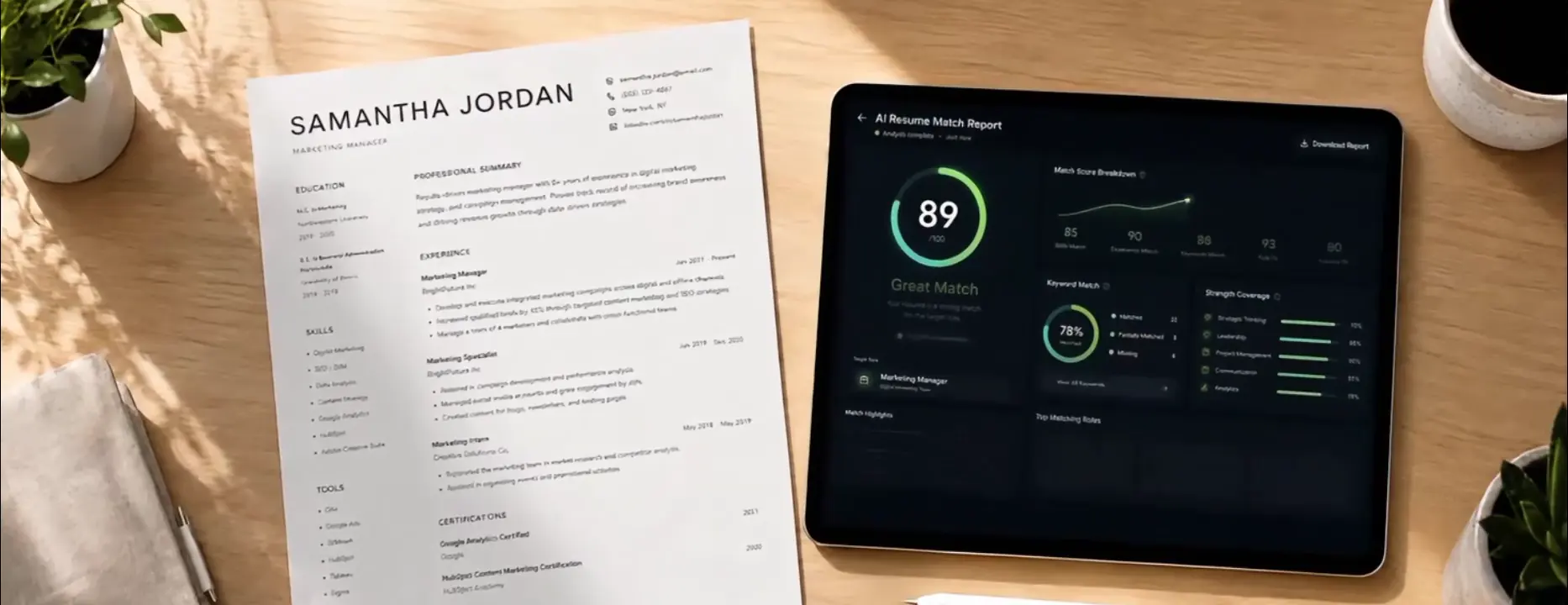
Check ATS alignment, role fit, and interview risks with an AI resume checker.
Clear answers to common questions about system design interviews, preparation, architecture tradeoffs, practice resources, and what interviewers evaluate.
Learn one repeatable sequence: clarify requirements, estimate scale, define APIs and data, draw the high-level architecture, trace critical flows, then discuss bottlenecks and tradeoffs. Apply that sequence to several different prompts and practice explaining every decision out loud under time pressure.
Prioritize APIs, data modeling, relational and non-relational storage, caching, queues and streams, partitioning, replication, consistency, load balancing, rate limiting, search, observability, security, and reliability. Study each topic as a tradeoff rather than as a list of technologies.
Many system design rounds last about 45 to 60 minutes, although format and depth vary by company and level. Plan to keep requirement clarification concise, establish a complete high-level design early, and preserve enough time for bottlenecks, reliability, and follow-up questions.
High-level design focuses on services, storage, data flow, scaling, reliability, and operational tradeoffs. Low-level design focuses more on interfaces, classes, object relationships, patterns, and component responsibilities. Some interviews combine both, so confirm the expected scope before going deep.
Frequently used prompts include a URL shortener, news feed, chat system, notification service, file storage platform, rate limiter, autocomplete service, metrics platform, payment system, and collaborative editor. Companies may change the product, but the underlying scaling and reliability decisions repeat.
ML system design adds data pipelines, evaluation, serving, drift, and feedback loops. Frontend design emphasizes rendering, state, performance, accessibility, and browser constraints. Mobile design adds offline behavior, synchronization, device resources, app lifecycle, and release constraints. All three still require clear requirements and explicit tradeoffs.
They are useful for building vocabulary and reviewing common patterns, but passive resources do not reproduce an interactive interview. Use books, courses, PDFs, and cheat sheets to learn concepts, then practice complete designs aloud and respond to follow-up questions without relying on a memorized diagram.
InterviewCue can help you practice open-ended system design prompts and continue with follow-ups about requirements, APIs, storage, bottlenecks, reliability, and tradeoffs. Use the feedback to improve the structure and clarity of your reasoning, then verify technical details with trusted engineering resources.
You can practice the architecture patterns that appear in interviews at large technology companies, but do not assume an unofficial question list predicts a current interview. Focus on transferable reasoning and adapt the depth to the role, level, product domain, and guidance provided by the recruiter.
Use real-time assistance only when the employer, recruiter, or interview platform explicitly permits outside tools. When it is not allowed, use InterviewCue before the interview for framework review, question practice, and mock system design conversations.
Remove employer names, internal architecture details, credentials, private customer data, unreleased metrics, and other confidential information before adding a resume or project example. You can practice the reasoning behind a system without sharing proprietary diagrams or identifiers. During a live interview, use outside assistance only when the employer or interview platform explicitly allows it.
Read the Privacy Policy