


01
What Technical Interviews Test
Interviewers evaluate fundamentals, applied problem solving, technical judgment, communication, verification, and the depth of knowledge required for the target role.
About Cookies and Data Collection
Analytics and marketing are enabled by default on this website. Cookies and similar technologies help us understand website use, measure advertising and improve our services.
Choose Customize to turn either category off, or Accept to keep both enabled. Your saved choices apply on future visits. Closing this dialog keeps the current settings.
For more information, please read our Privacy Policy and Cookie Policy.
Cookie settings
Always activeFunction:
These cookies and similar technologies are used for activities that are strictly necessary to operate or deliver the service you requested from us.
Learn what a technical interview is, what interviewers evaluate, and how to prepare for coding, problem-solving, technical knowledge, and project deep dives. Start with the pillar overview, explore a specialized topic, or practice common technical interview questions.
Technical interviews explained
A technical interview assesses how you apply the knowledge and problem-solving skills required for a role. For software engineering candidates, it may include coding, debugging, system design, technical concepts, and discussions of past projects. The format and depth vary by company, role, and seniority.
Strong technical interviews are not only about reaching the correct answer. Interviewers also listen for clear assumptions, structured reasoning, sensible tradeoffs, testing habits, and the ability to respond when requirements or constraints change.
When the interviewer and interview policy explicitly allow outside assistance, an AI interview copilot can provide answer cues based on your background. Check each suggestion and explain the technical reasoning in your own words.
Interviewers evaluate fundamentals, applied problem solving, technical judgment, communication, verification, and the depth of knowledge required for the target role.
You may face coding, debugging, SQL, system design, or a discussion of past projects. Not every role includes every format. Ask the recruiter about the rounds, duration, programming language, and permitted tools before planning your practice.
You clarify the prompt, state assumptions, choose an approach, work through the problem, test the result, and answer follow-up questions about complexity, alternatives, risks, or edge cases.
Junior candidates need reliable fundamentals. Senior candidates must also show system-level judgment, tradeoff awareness, ownership, and the ability to explain decisions across teams.
Build a technical interview practice routine around your target role. Review the relevant concepts, work through one question aloud, test your reasoning with follow-ups, and retry the answer after reviewing your weakest point.
Use the job description and recruiter guidance to choose a coding, debugging, SQL, system design, or project question. Focus each session on one skill required for the role.
Refresh the concepts needed for the question, then set a time limit and explain your approach aloud. Write and run code, validate a query, or sketch a design as the task requires.
Check edge cases, challenge one assumption, and answer a follow-up question. Explain when your approach would fail and what you would change.
Identify one weakness in correctness, reasoning, testing, or communication. Revise your answer and retry the question before moving to a similar problem.
Use this quick reference before a practice session. Select the topics relevant to your role, then apply the reminders to a real question.
| Topic | Quick reminder | Practice check |
|---|---|---|
| Data structures & complexity | Choose a structure around the operations you need. Hash-table lookup is typically average O(1), while worst-case behavior and memory use depend on the implementation. | Can you explain the time and space costs, alternatives, and assumptions? |
| Coding & testing | Check empty input, duplicates, boundary values, and invalid input where relevant. | Have you run representative tests and explained why they matter? |
| SQL & data | Define the result grain. Check join multiplicity, NULL handling, and ties before optimizing the query. | Can you validate the result with a small dataset and row counts? |
| Debugging | Establish impact, inspect recent changes, and use logs, metrics, and traces to test one hypothesis at a time. | What evidence supports or rejects your current hypothesis? |
| System design | Clarify requirements and scale before choosing APIs, data models, components, and failure-handling strategies. | Can you explain one tradeoff, bottleneck, and failure scenario? |
This is a preparation reference, not a complete syllabus. Adapt it to the interview format confirmed by the recruiter.
Move from the broad pillar into focused preparation for software engineering, reliability, specialized technical roles, and technical leadership.
01 / 05
 Core Guide
  Question Guide
  Reliability
  QA & SDET
  Leadership
 These practice questions focus on software engineering interviews, including coding, debugging, SQL, system design, and project discussions. Answer each question aloud, then use the guidance to check your reasoning.
Restate the goal, ask about inputs and constraints, work through a simple example, compare plausible approaches, then explain why your chosen solution fits. Keep the interviewer involved before you begin implementation.
Sample approachFirst clarify whether the task is only to detect any duplicate or to return the duplicate IDs. For detection, traverse the list and keep a set of IDs already seen. If an ID is already in the set, report a duplicate; otherwise add it and continue. With typical hash-set behavior, this takes average O(n) time and up to O(n) extra space, but performance and memory depend on the implementation, hash behavior, and input.
What to checkTest empty input, a list with no duplicates, and the same ID appearing more than twice. State whether processing stops after the first duplicate and whether ID normalization is required.
Follow-upWhat would you change if the input could not fit in memory?
Start with a representative example, then cover boundaries, empty or invalid input, duplicates, large inputs, and likely failure paths. Explain what you would unit test, integrate, monitor, or verify manually.
Sample approachConfirm which endpoints, user segments, regions, and latency percentiles changed. Compare pre- and post-deployment traces, database timings, downstream dependency latency, and CPU, memory, connection, and saturation metrics. Treat the timing as a clue rather than proof: form a testable hypothesis, such as a slower query or extra network call, and use evidence to confirm or reject it before choosing a rollback, traffic reduction, or targeted fix.
What to checkVerify the baseline and time window, separate client and server latency, inspect p50, p95, and p99 rather than only an average, and record whether the mitigation actually restores the affected percentile.
Follow-upWhat would you check next if rolling back the deployment did not improve latency?
Define the grain of the result, identify joins and filters, account for nulls and duplicates, then validate the query with row counts and small samples. Discuss indexing or partitioning only after correctness is clear.
Clarify the clients and core use cases, define resources and request or response shapes, then discuss validation, authentication, errors, idempotency, pagination, versioning, rate limits, and observability.
Clarify functional and quality requirements, estimate scale, define APIs and data, propose a high-level architecture, trace critical flows, then discuss bottlenecks, tradeoffs, reliability, security, and cost.
Sample approachUse your own project details: “The situation was [project and user need], with [main technical, time, or reliability constraint]. I personally owned [your contribution], while the team handled [team responsibilities]. I chose [decision] after comparing [alternatives] because [tradeoff]. We validated it with [tests, monitoring, review, or experiment], and the actual result was [truthful outcome]. In hindsight, I would [specific reflection].”
What to checkKeep your contribution distinct from team work, explain why an alternative was rejected, and use only results you can substantiate. Do not invent a customer story, metric, or outcome.
Follow-upWhich alternative did you reject, and under what conditions would it become the better choice?
Give a concise definition, use a concrete example, and explain when the concept is useful, where it fails, and how it affects a real design or implementation decision. Avoid turning the answer into a vocabulary dump.
Start with the goal and user impact, replace unnecessary jargon with a clear mental model, preserve the important constraint or risk, and check that the listener understands the decision and its consequences.
Rehearse role-aware technical questions, respond to realistic follow-ups, and improve how you explain concepts, code, projects, constraints, and tradeoffs.

Get real-time AI interview assistance with clear answer cues during live interviews.
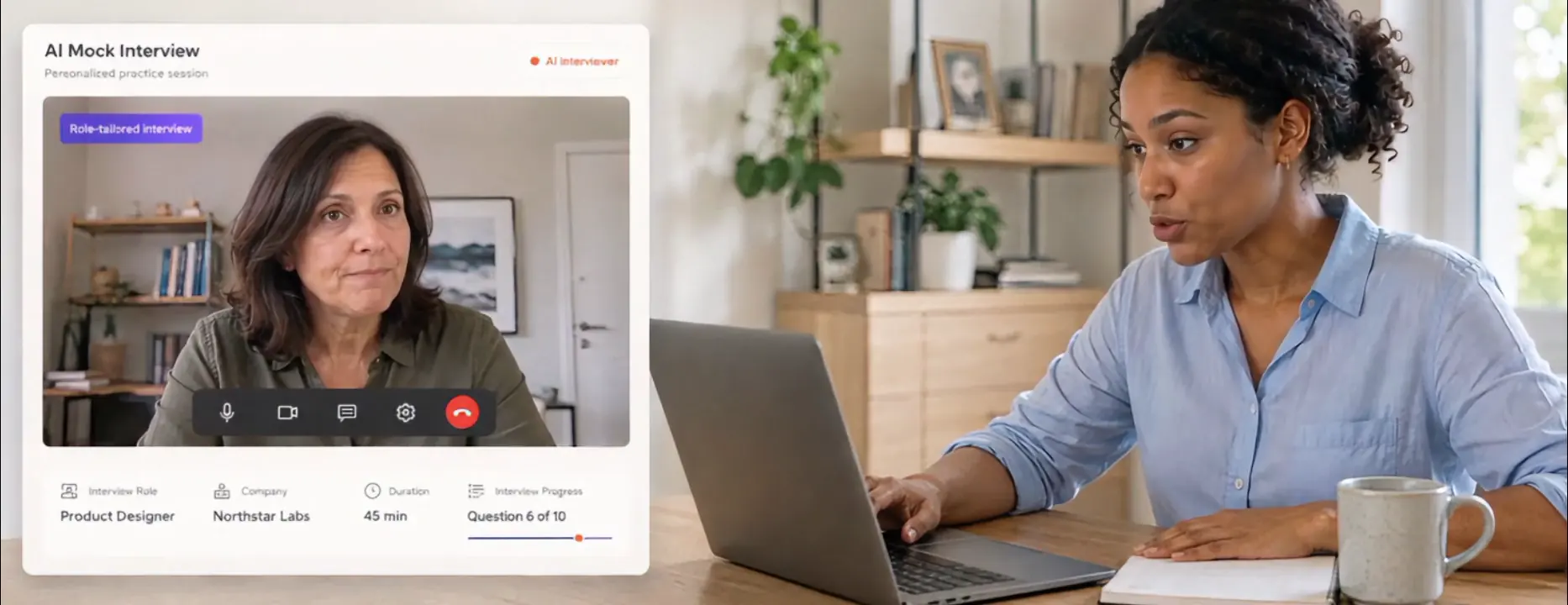
Practice role-specific questions and get actionable feedback in a personalized AI mock interview.
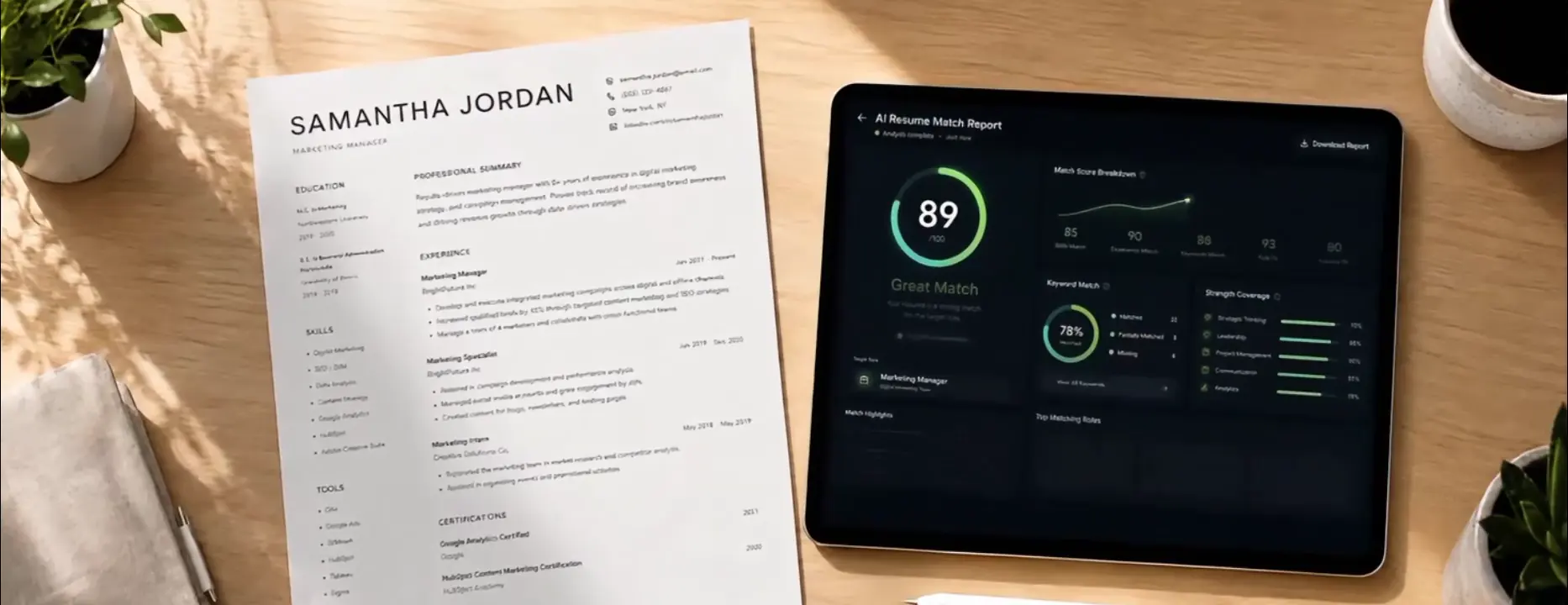
Check ATS alignment, role fit, and interview risks with an AI resume checker.
Practical answers about using InterviewCue to plan, practice, review, and improve for a technical interview.
InterviewCue uses the resume, target role, and job description you provide to make practice more relevant to the experience, responsibilities, and likely risk areas in your interview. Remove confidential details before uploading any material.
Start with the job description and the interview formats confirmed by the recruiter. Software engineering roles may require data structures, algorithms, language fundamentals, SQL, system design, or specialized domain knowledge. Use the cheat sheet above to choose relevant topics, then practice applying them to questions. Prepare project examples that clearly explain your contribution and technical decisions.
The mock interview workflow is designed to help you review recorded responses, scores, answer issues, and improvement priorities. Use that review to choose the next question or skill to practice instead of repeating the same session unchanged.
InterviewCue can continue a role-aware practice conversation with follow-ups about assumptions, constraints, tradeoffs, testing, results, and alternatives. This helps reveal whether an answer still holds up after the first response.
The resume analysis can surface projects, unclear impact, and likely follow-up areas. You can then practice explaining your contribution, technical decisions, tradeoffs, measurable results, and what you would change now.
No. InterviewCue helps with realistic questioning, follow-ups, answer structure, and review. You should still write and run code where appropriate, verify specialized details with trusted documentation, and use domain-specific resources for deeper study.
Ask questions that help you understand the role and the team, such as: “What technical challenges is the team currently working on?” “What would strong performance look like in the first three months?” and “How does the team review design decisions and technical tradeoffs?” Choose questions appropriate to the interviewer and leave time for their answers.
Use real-time assistance only when the employer, recruiter, or interview platform explicitly permits outside tools. When allowed, use concise cues to stay structured; the explanation, decisions, and technical judgment should remain your own.
Remove proprietary code, credentials, employer or customer identifiers, private architecture details, unreleased metrics, and any other confidential information. Keep only the context needed to practice the reasoning and communication being evaluated.
Begin with resume and role analysis, complete a realistic mock interview, review the recording and improvement priorities, then run shorter sessions on the weakest technical areas. Leave time for one final full practice session without cramming new topics.
Remove employer names, proprietary code, credentials, private customer data, unreleased metrics, internal architecture details, and other confidential information before adding a resume or project example. During a live interview, use outside assistance only when the employer or interview platform explicitly allows it.
Read the Privacy Policy